
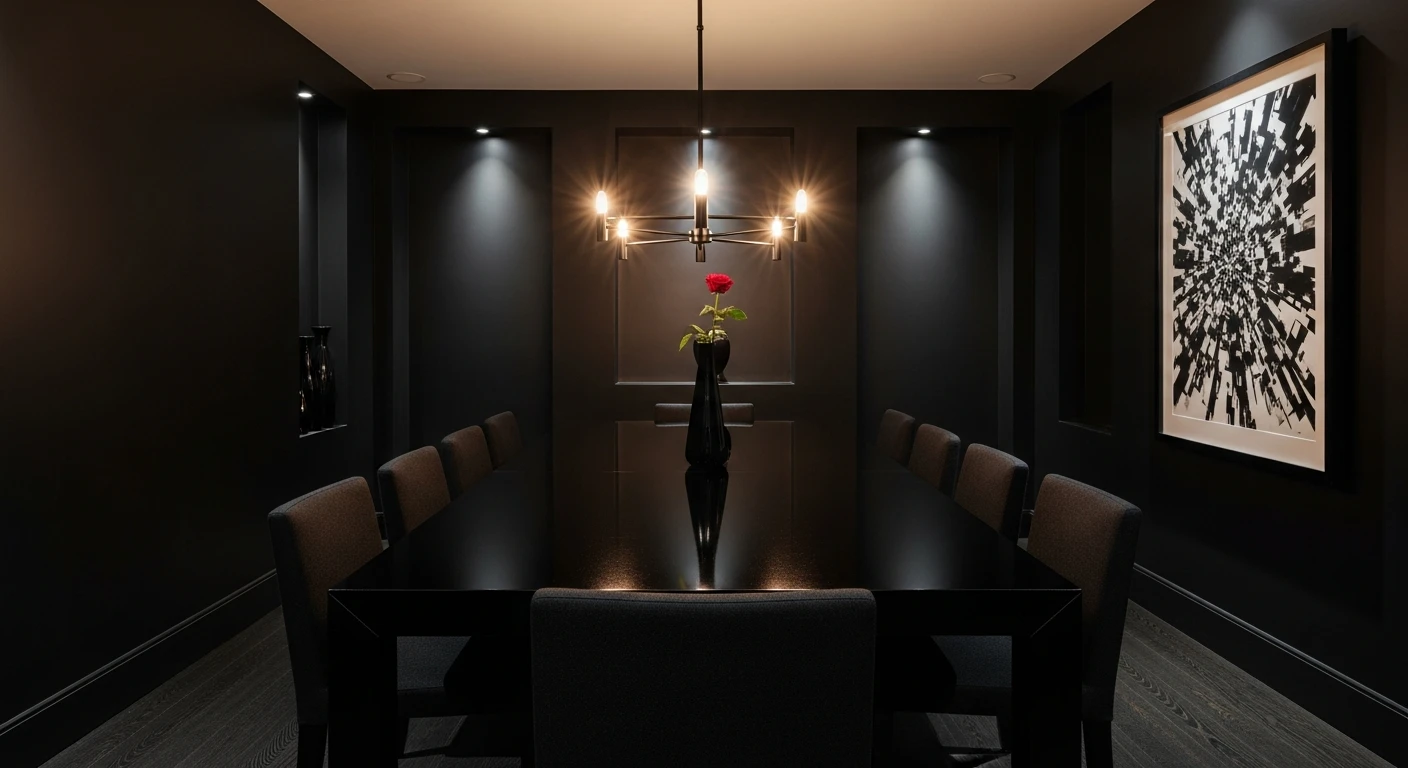
Think a black dining room is a one-way ticket to a dungeon? Think again. Ditch the beige and get ready to learn how the darkest hue on the palette creates the most sophisticated, intimate, and downright coolest spaces. We’re breaking down 12 killer looks and giving you the exact blueprint to steal each one.
1. Go Matte and Metallic
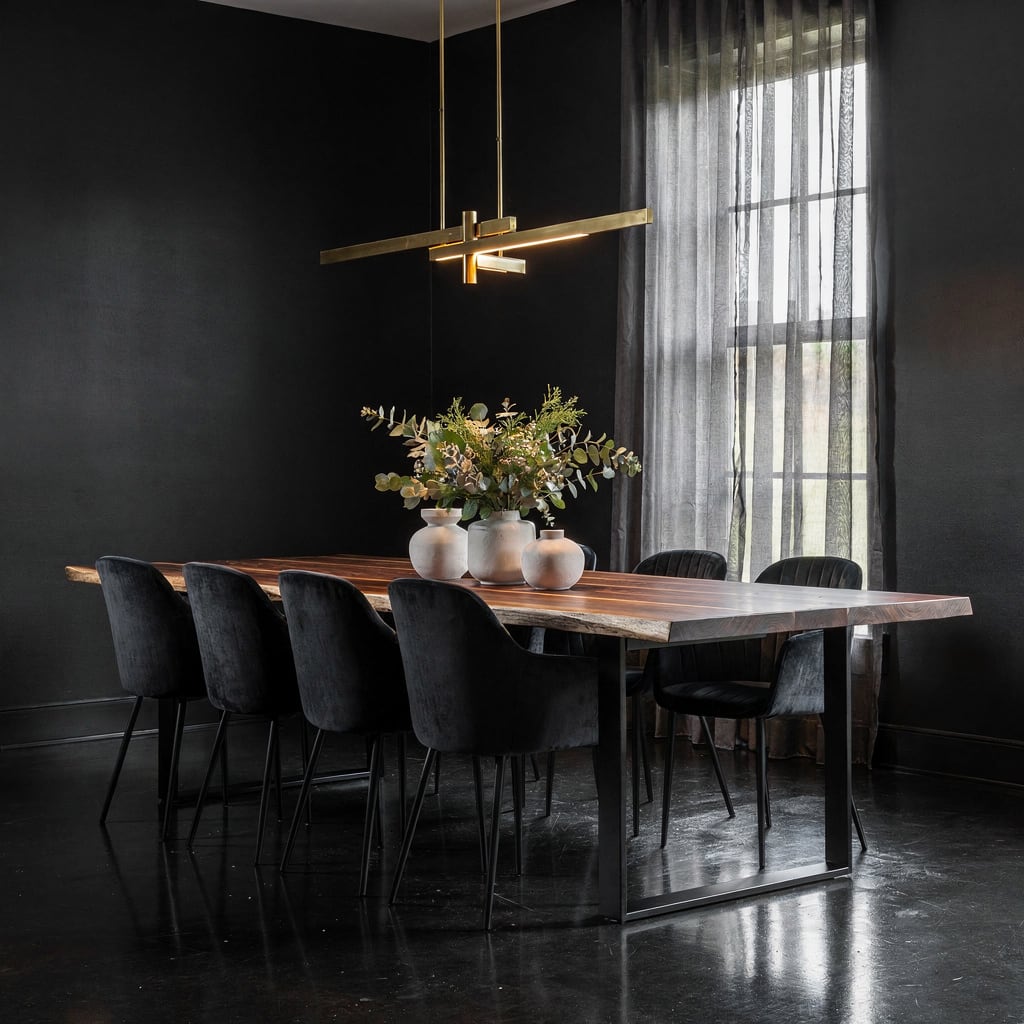
Embrace the power of contrasting textures to keep a dark room from feeling flat. Start by committing to a deep, light-absorbing matte on your walls and floor—think charcoal plaster and polished concrete. This creates a serene, cocoon-like base. Introduce your metallic moment with a single, bold fixture; a linear brass pendant is perfect for casting a soft, ambient glow. Always balance the hard surfaces with something sumptuous, like upholstered velvet chairs. Pro Tip: When working with a monochrome base, your lighting isn’t just functional—it’s your primary accessory. Choose a sculptural piece that commands attention.
2. Lacquer and Light It Up
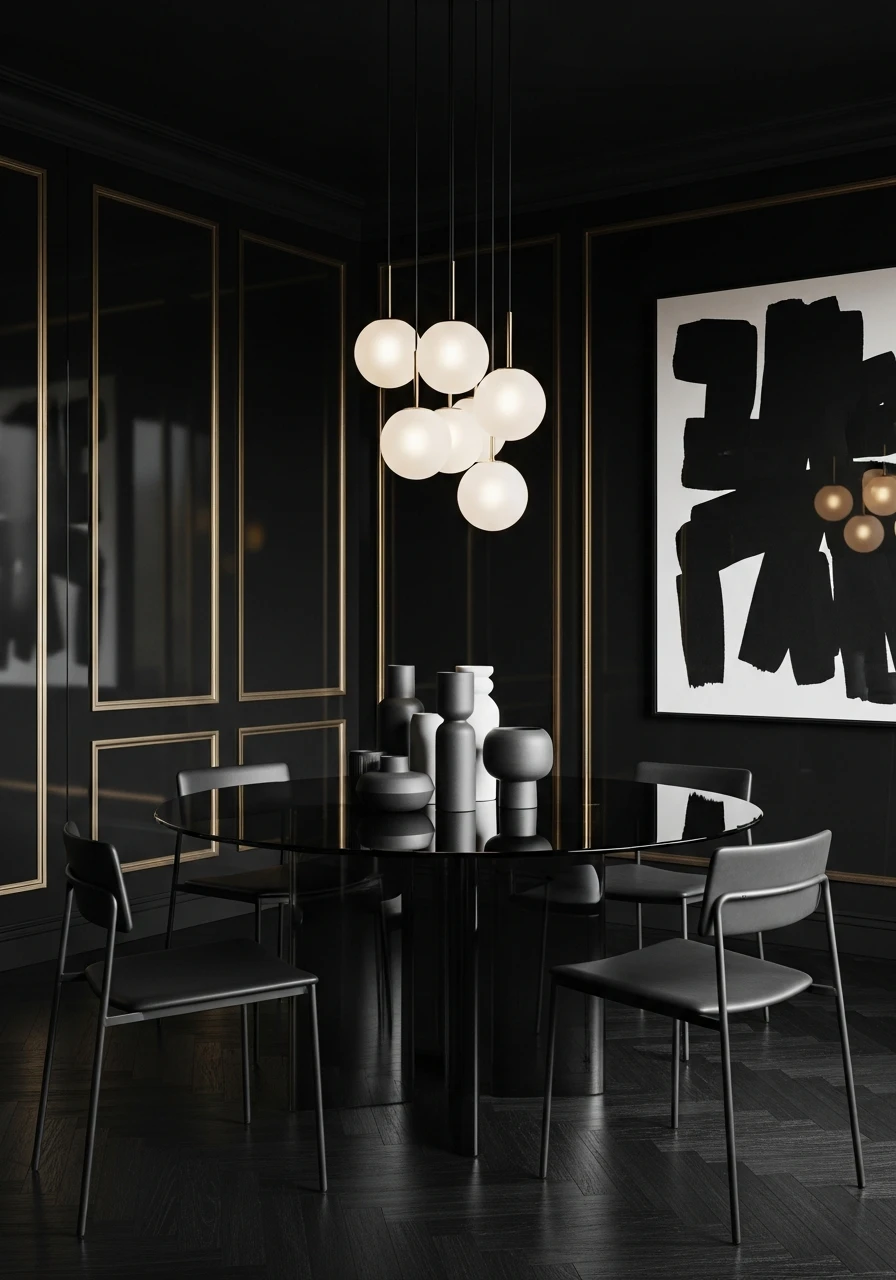
For pure, unadulterated glamour, high-shine lacquer is your best friend. Use it on wall panels or trim for a luxurious, reflective surface that bounces light around the room. Pair this with a moody, intricate floor like midnight herringbone oak to ground the space. Your lighting should be soft and diffused; a cluster of frosted globe pendants will prevent harsh reflections in the glossy surfaces. Pro Tip: In a high-gloss room, every smudge and fingerprint shows. Keep a microfiber cloth handy for daily wipe-downs to maintain that impeccable finish.
3. Embrace the Seamless Indoor-Outdoor Flow
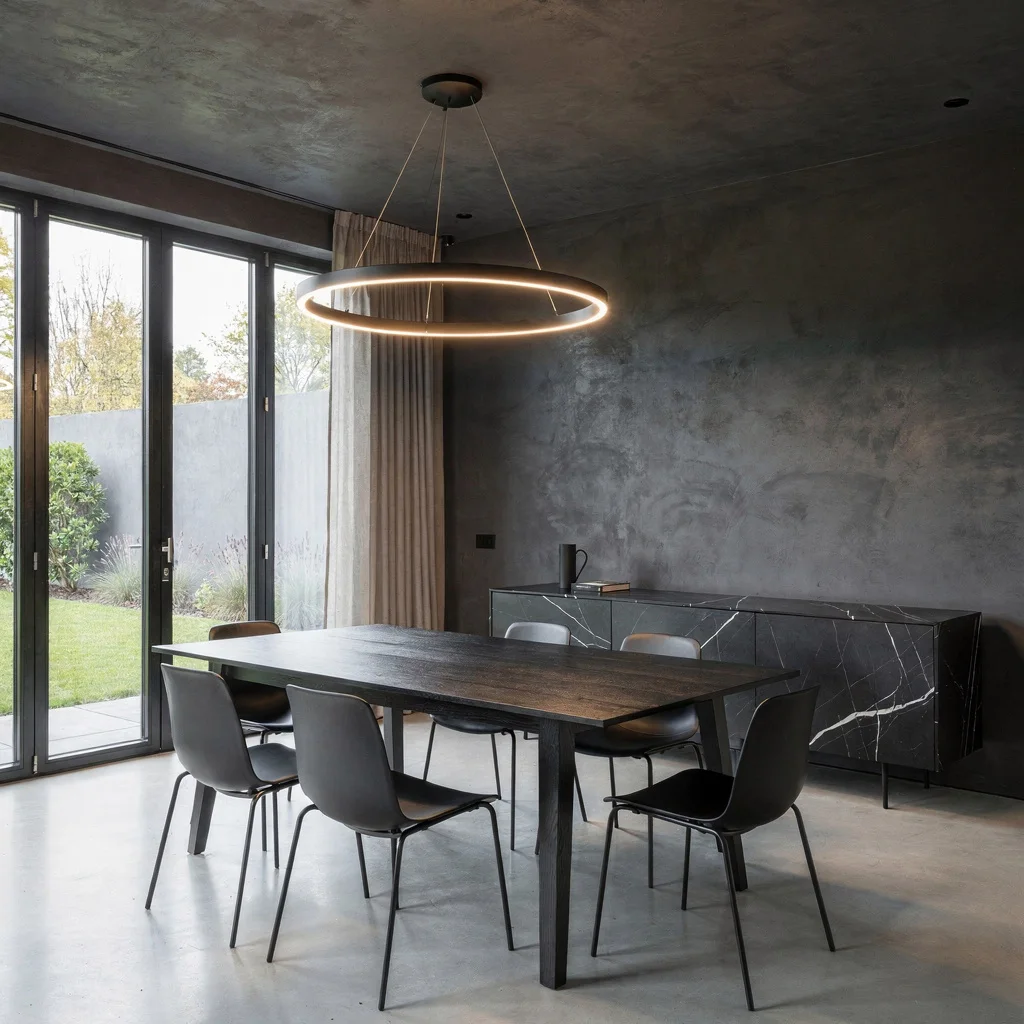
The key to preventing a dark room from feeling closed in is to literally open it up. Use floor-to-ceiling black-framed glass doors to erase the boundary between your dining area and the outdoors, making the space feel larger and airier. Keep the material palette simple and continuous—microcement walls flowing into a stained oak table creates a cohesive, modern look. Pro Tip: Match the finish of your interior metal elements (chair frames, light fixtures) to the finish on your window and door frames. This tiny detail creates a professionally designed, intentional flow.
4. Play with Textured Paneling
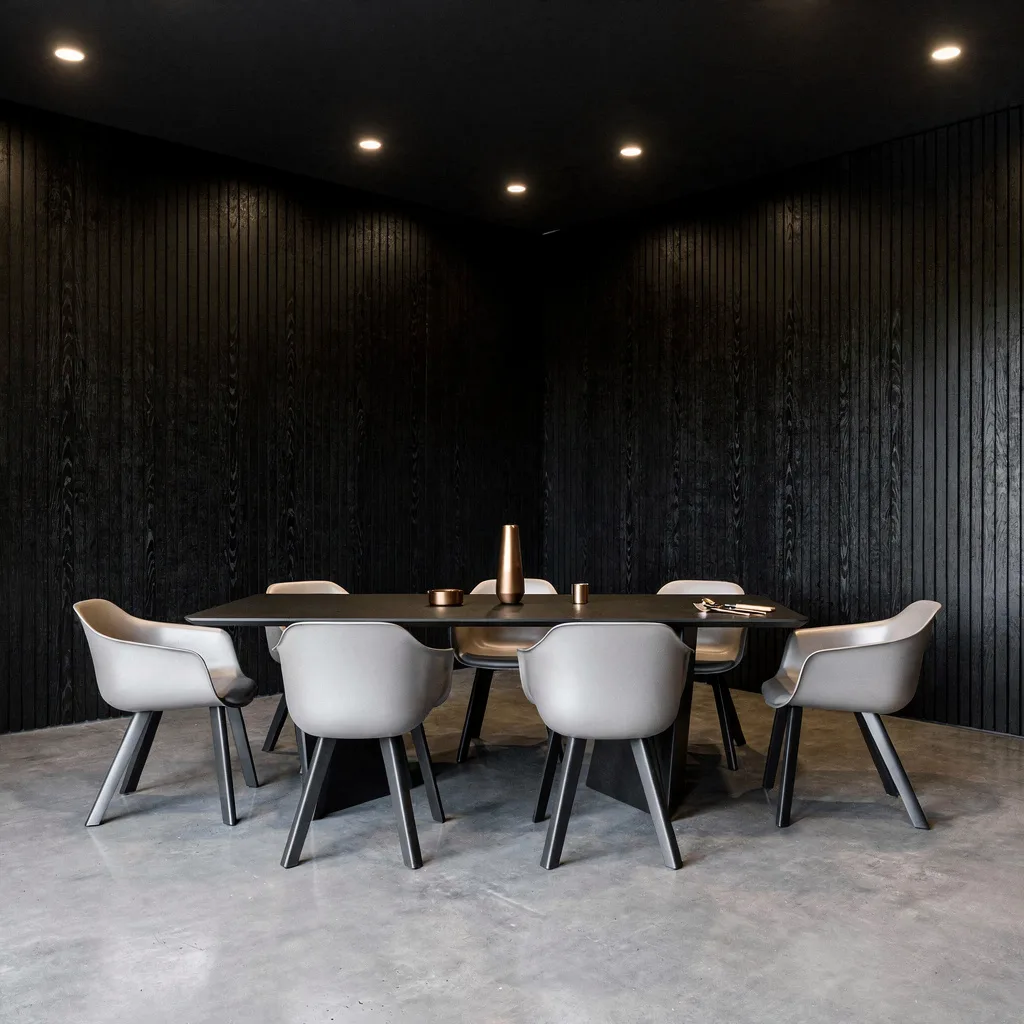
Vertical slat wood panels add crucial rhythm and depth to a dark wall, making it a dynamic feature rather than a flat void. Choose a matte finish to keep the look modern and avoid a rustic feel. Let your lighting do the work; use recessed LEDs to graze the surface and highlight the beautiful wood grain texture. Keep furniture sleek and sculptural to contrast the linearity of the walls. Pro Tip: When installing slat walls, run them from floor to ceiling. Stopping at chair-rail height is a dated move that will chop up the space.
5. Build in Your Seating
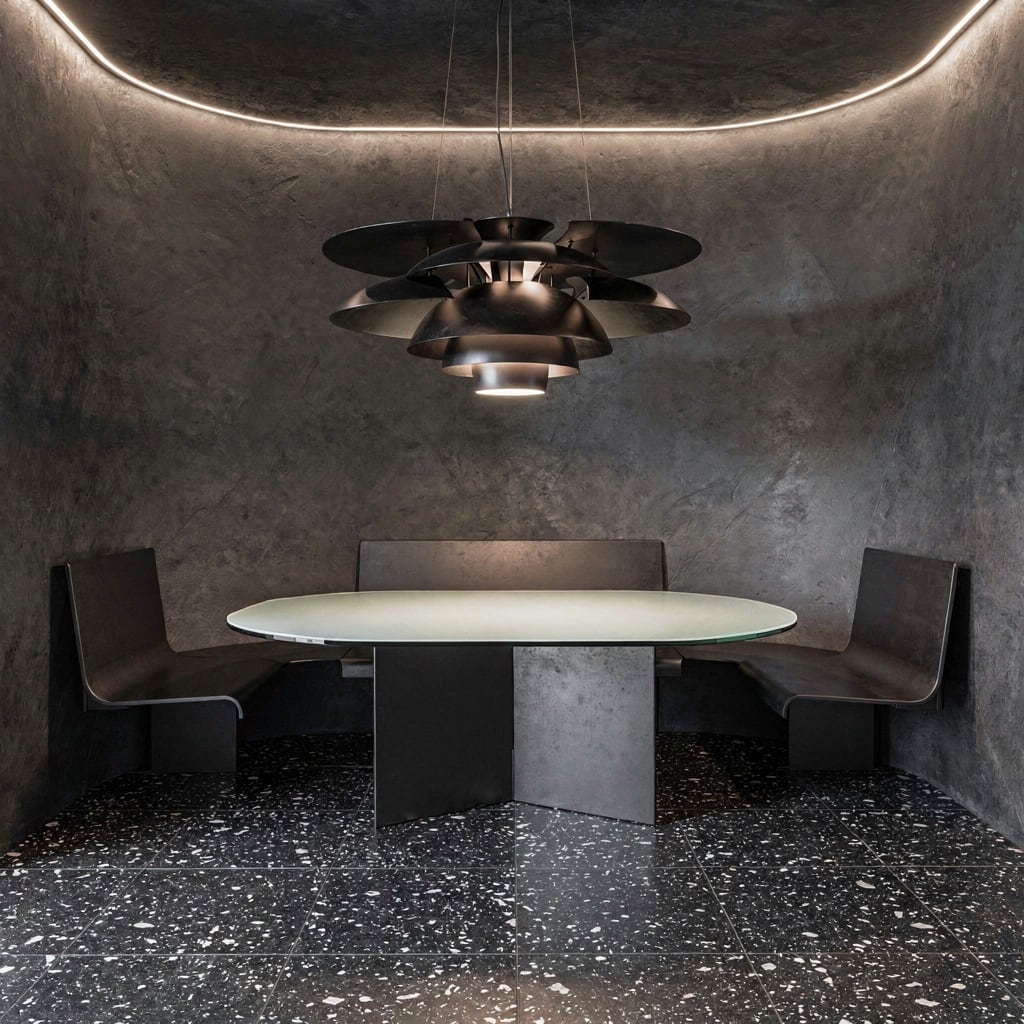
Maximize a small or awkward nook with built-in banquette seating. A cantilevered blackened steel bench is a sleek, space-saving solution that feels incredibly custom. Pair it with a table that has a visually light base, like glass, to maintain an open feel. Use an oversized, multi-shade pendant to define the dining zone and create an intimate pool of light. Pro Tip: Always, always add a thick cushion to a built-in bench. No one wants to enjoy a long dinner on a hard, cold surface.
6. Add Luxe Texture with Plaster and Boucle
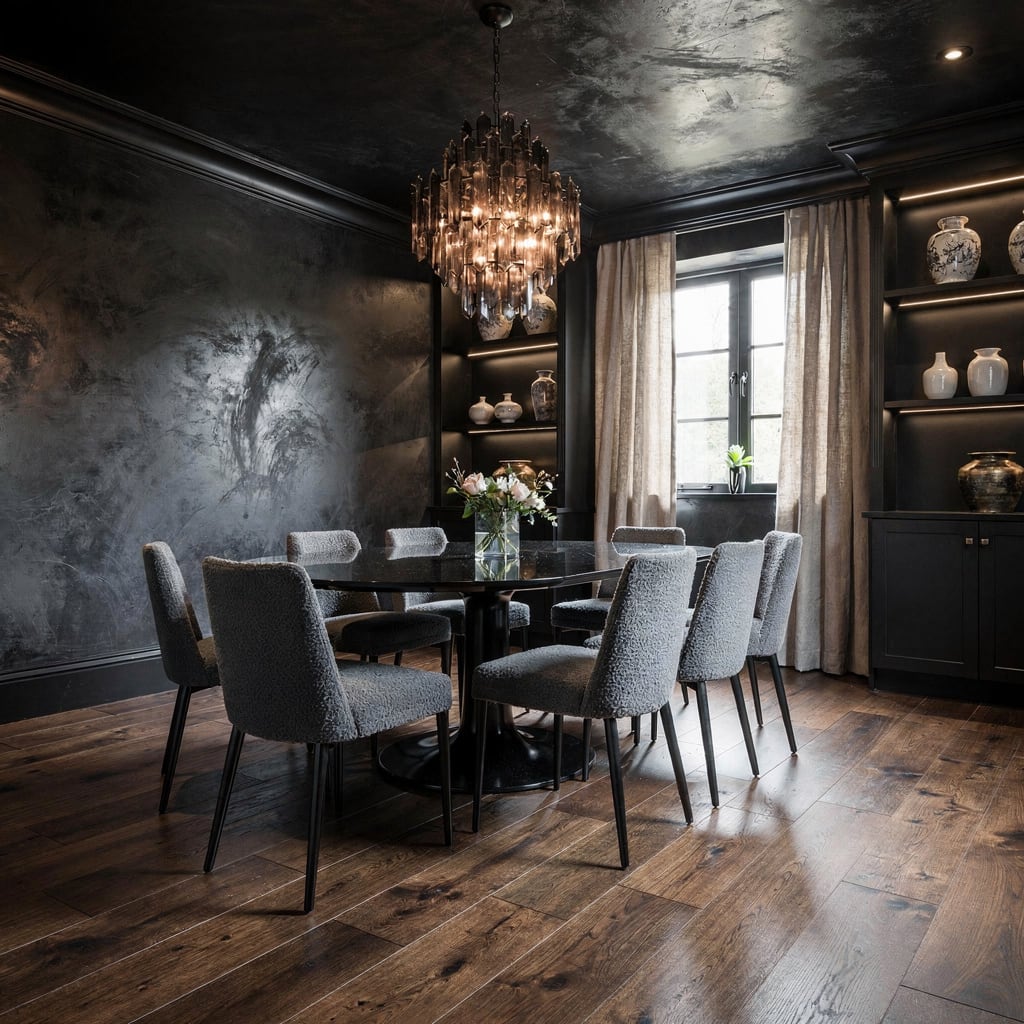
Venetian plaster is the ultimate high-end move for adding subtle, organic texture to your walls. Its soft sheen catches the light differently throughout the day. Balance this sophistication with the cozy, inviting texture of boucle fabric on your dining chairs. This combination of hard, refined walls and soft, nubby seating is a masterclass in contrast. Pro Tip: When choosing a light fixture for a textural room, go for something with refraction. A tiered crystal chandelier will scatter tiny rainbows everywhere, adding magic to the moodiness.
7. Use Reflection to Your Advantage
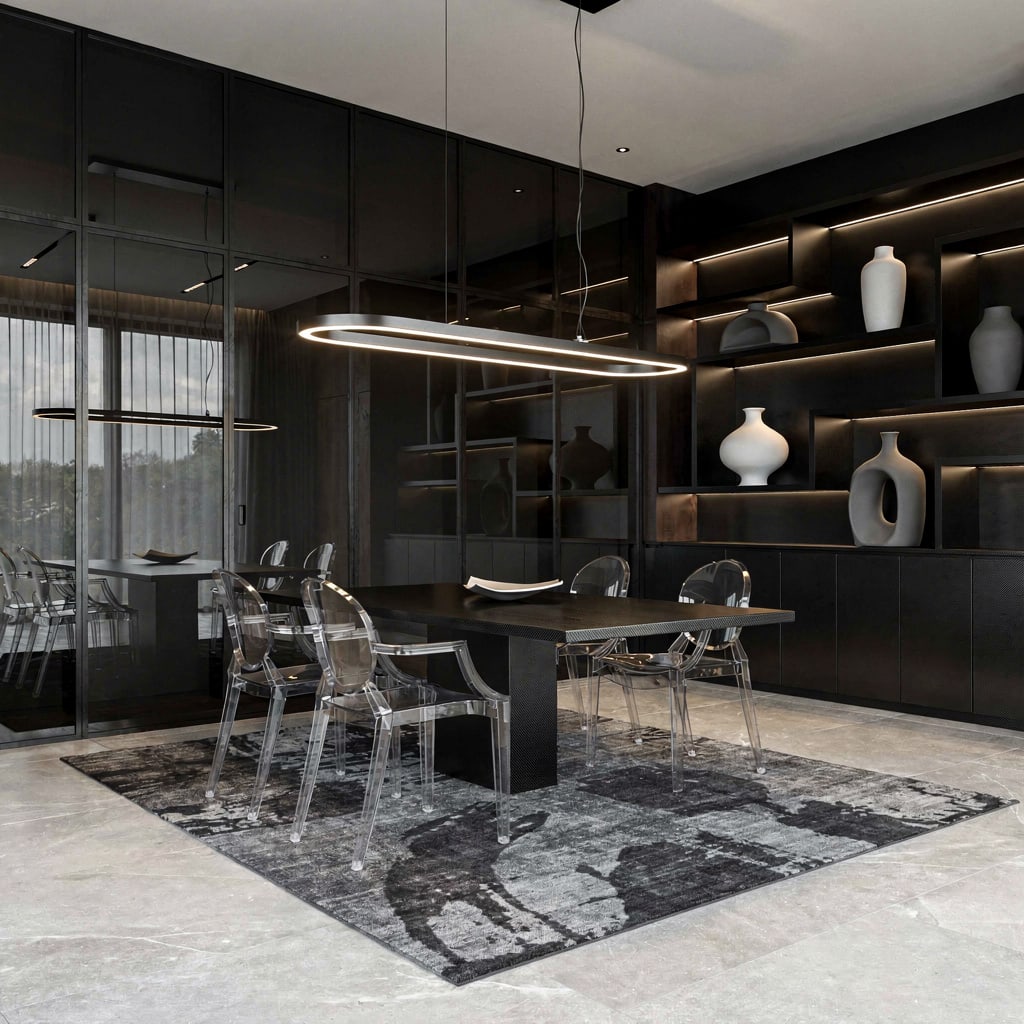
Floor-to-ceiling black glass panels are a bold, modern trick to make a room feel infinitely larger. The reflections add depth and drama without any visual clutter. Ground the potentially dizzying effect with a substantial, textural rug and a table with a solid material presence, like carbon fiber. Keep seating transparent with acrylic chairs to maintain the airy illusion. Pro Tip: Black glass is a fingerprint magnet. Specify it with a subtle satin or frosted finish instead of a high-gloss to minimize maintenance nightmares.
8. Define the Space with Coffering
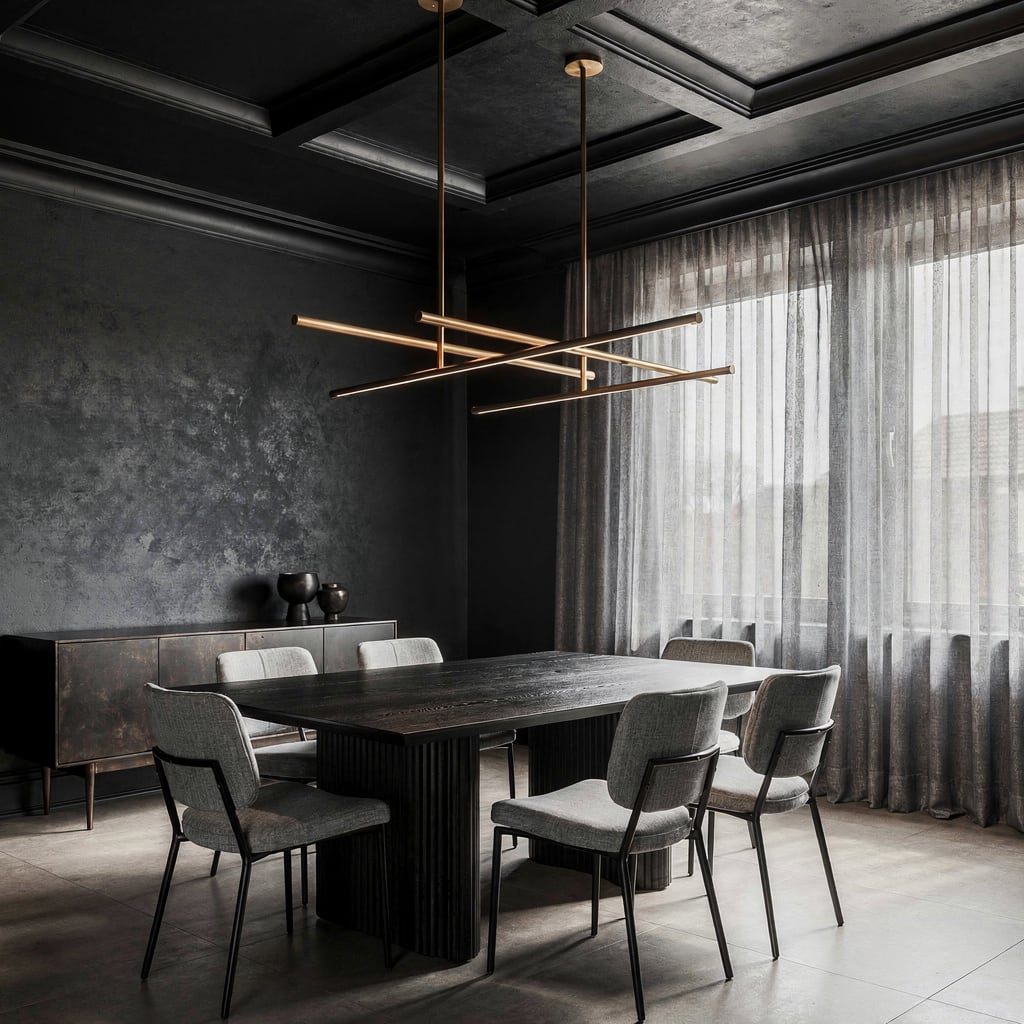
A matte black coffered ceiling is a power move that draws the eye up, adding architectural grandeur and making the room feel taller. Use this strong overhead element to anchor your space, then keep everything else relatively simple and streamlined. Choose a harmonious but contrasting color for your chairs, like dove gray, to prevent the room from becoming a black hole. Pro Tip: For a contemporary take on a traditional detail, use ultra-slim, modern profiles for your coffered ceiling beams instead of bulky, traditional moldings.
9. Warm Up Black with Scandinavian Principles
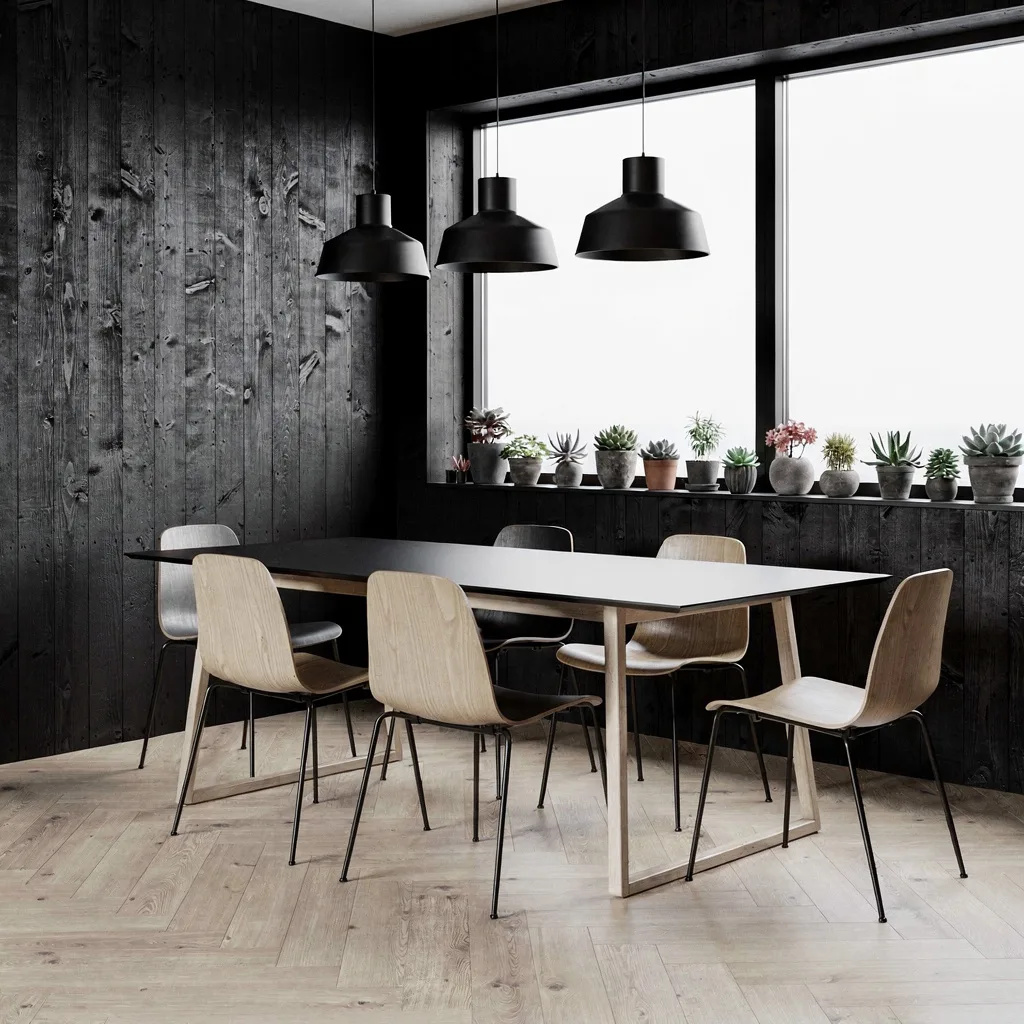
The Scandinavian secret to using dark tones is to balance them with plenty of light wood and organic shapes. Apply black stain to wood cladding on an accent wall, but let a pale, wide-plank oak floor dominate to keep the space bright. Choose simple, light-toned chairs in a natural material like molded plywood to maintain that airy, Nordic feel. Pro Tip: Incorporate life. A windowsill lined with simple potted succulents or greenery is non-negotiable for adding a breath of fresh air to the scheme.
10. Mix Your Black Marbles
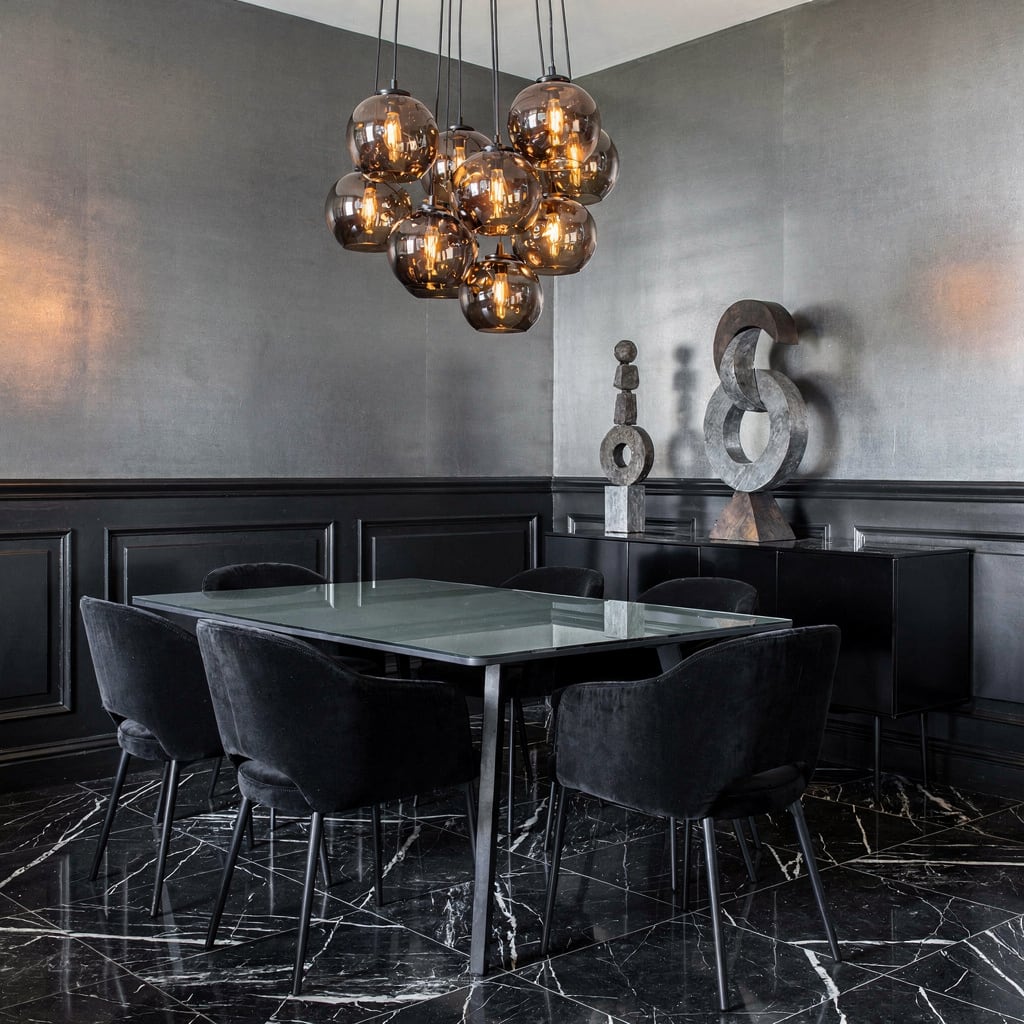
Not all blacks are created equal. Combine different black materials for a layered, opulent look. Pair large-scale marble floor tiles with white veining against smooth black lacquer cabinetry. The variation in pattern and sheen creates a rich, custom feel. Use a statement chandelier with multiple glass elements to add sparkle and break up the large dark planes. Pro Tip: When using a bold marble, let it be the star. Keep other patterns to a minimum and instead play with a variety of solid textures like velvet, lacquer, and glass.
11. Celebrate the Architecture
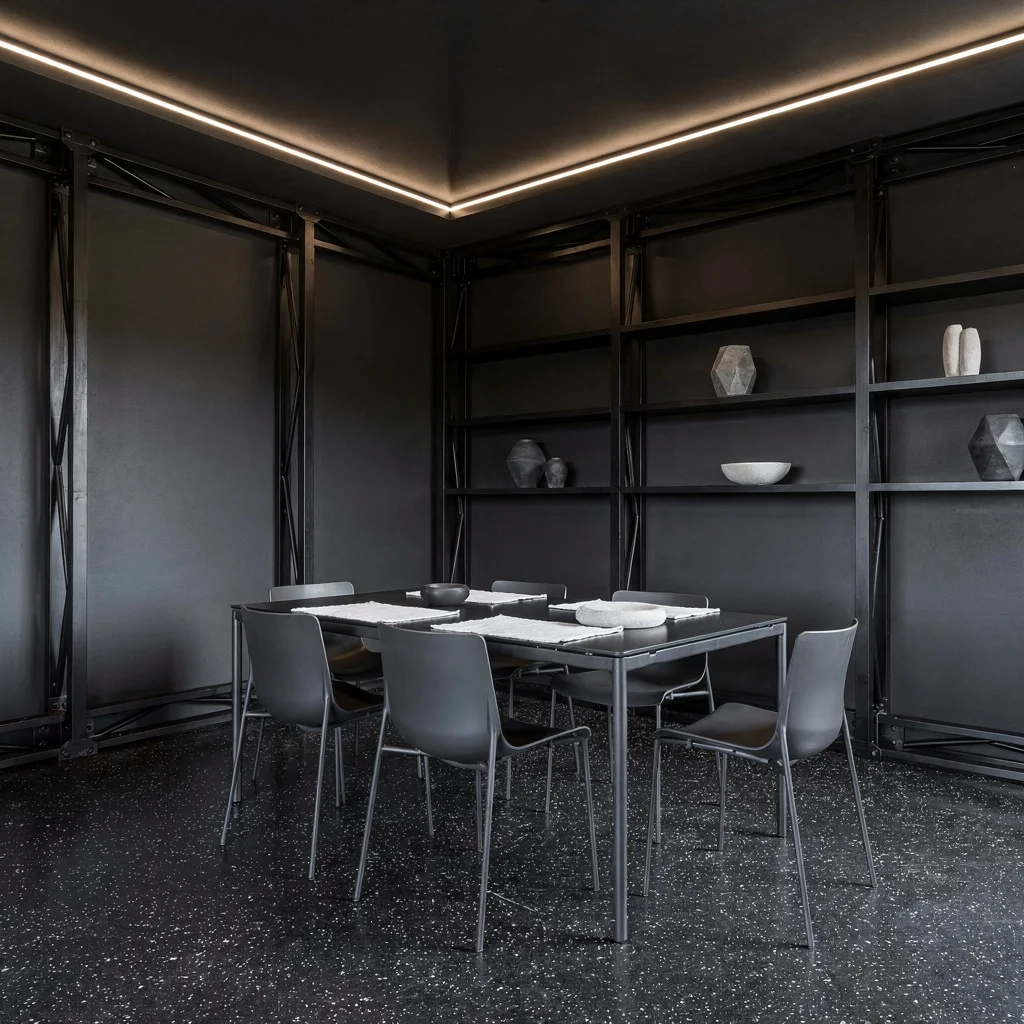
If you have strong architectural lines, don’t hide them—paint them black. Matte black wall trusses or floating ceiling details become dramatic sculptural elements when highlighted with concealed LED strips. This approach is minimalist and powerful. Furnish the space with equally lean and lightweight pieces, like a slim steel table and resin chairs, to keep the focus on the architecture. Pro Tip: In a stark, architectural space, your table settings are crucial. Use stark white linens and tableware to create crisp, intentional points of contrast.
12. Lean into the Industrial Loft Vibe
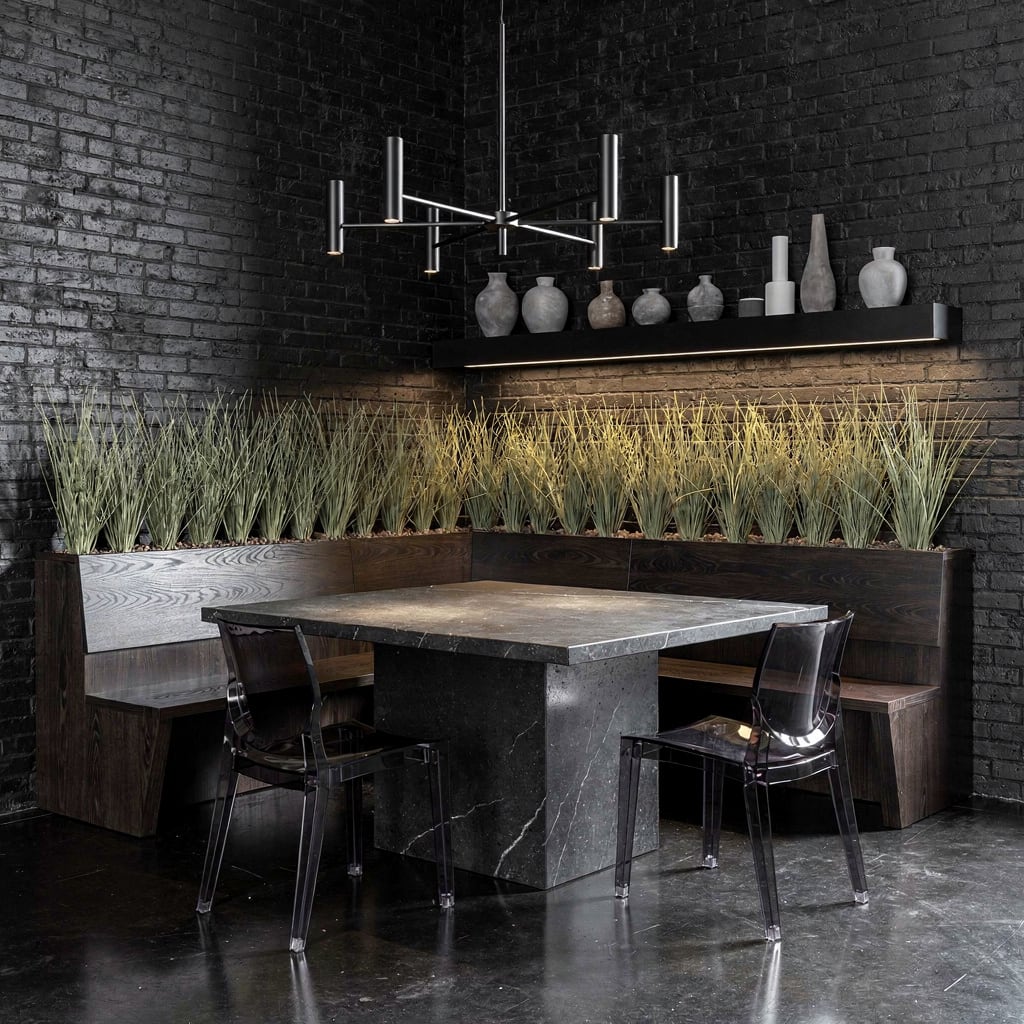
Textured matte black brick and stained concrete are your foundations for an industrial-chic dining room. This look is all about raw, honest materials. Contrast the heaviness of a monolithic stone table with the visual lightness of acrylic or wood side chairs. Incorporate built-in planters with architectural grasses to soften the hard edges and add a vital organic element. Pro Tip: Industrial doesn’t mean unfinished. The editing is key. Curate a very small, monochromatic display of art or ceramics on a simple ledge to show intention and avoid a cluttered, chaotic feel.
Stop playing it safe. Black isn’t a color; it’s an attitude. It’s the backdrop that makes your furniture, your art, and your life look more interesting. Pick a concept, commit to it, and build a dining room that doesn’t just host dinners—it starts conversations.